
First time parents quickly realize that suddenly being thrown into THIS new job – no training, no breaks, no going home at the end of the day to decompress and refresh – likely has the steepest learning curve they’ve ever experienced.
It can be totally overwhelming just sustaining the new little life, let alone realizing what medical and parenting choices you might have to make.
A new dad recently was surprised that I helped his baby stop crying by using “white noise.”
I had to look at his face to make sure he wasn’t joking. I didn’t know how to say, “Yeah, well…there are actually about 5,267 other reasons for you to figure out. Good luck, buddy!”
It’s tough.
And some of the decisions that aren’t always black and white are tough too. We make some parenting and health decisions knowing that either way could result in big problems, but we have to do what we feel is best using the information we have.
Before our first child was born, we had done some reading and were committed to a number of goals, some of them a bit out of the mainstream. Here are five of those choices that we continue to feel strongly about as baby four approaches… in a week or so!
This post is part of a series. Catch up here:
- 5 Standards we Refuse for Prenatal Care
- Alternatives to the Orange Glucose Drink for Gestational Diabetes Screening
- 5 More Interventions we Refuse in Labor and Delivery
- Keep Baby Safe and Healthy with 5 Simple Natural Parenting Goals
1. We Say No to Early Vaccines, especially the Hepatitis B vaccine given immediately after birth

(image by Dodgerton Skillhause via Morguefile)
The routine poke for a disease that usually only ravages sexually active adults falls into the “eye goop” category for us, which I mentioned in the last post on labor and delivery procedures. There is zero chance of an STD in my body, so why bother? I always ask, “Is this necessary?”
Every time we make one of the dozen or so different decisions about these routine interventions that happen at birth and regular check ups, it’s one of the hardest parts of parenting. I don’t relish that, nor do I think I have all the answers. We’re completely sure we’re doing the right thing. (And we’ve experienced one of the diseases we have a shot for, too – brought home, ironically, by child number one…the fully vaccinated one.)
2. All artificial nipples, including pacifiers and bottles for the first month
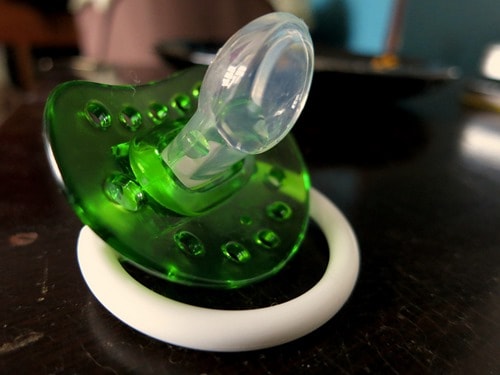
(image by Antti T. Nissinen via Flickr)
We choose to ecologically breastfeed, and in order to give the baby the best chance at a good latch and avoid “nipple confusion,” we don’t do pacifiers or bottles right away. At least, that’s the intention.
It doesn’t always work out perfectly, but I definitely won’t allow a nurse at the hospital to pacify my tiny infant who needs to learn to nurse for comfort and for nourishment. They don’t leave my sight.
And definitely no bottles of water, which only fill the baby up with nothing instead of wholesome colostrum! (That practice is a bit outdated, but I bet some hospitals still provide them to nursing moms. My own mom couldn’t breastfeed and I strongly feel that all the bottles of water she was counseled to give “after each feeding” may have (a) nearly killed me and (b) been the cause of her seeming failure.)
Besides that, navigating the waters of “which material is safe for baby?” was tricky enough! Human tissue (mine) makes the cut easily; silicone vs. plastic vs. ??? nipples? Who knows!
3. Skip The Newborn Schedules

(image by Alan Cleaver via Flickr)
Clocks and babies strike me as an artificial relationship, so I always nursed on demand, at least at first.
Babies will get straightened out eventually, and you’ll survive those first few weeks when they think night is day and vice versa!
Besides that, I can barely get anywhere on time myself, so I didn’t need one more chart or timetable to stress me out. 
Everything I read about time-dependent schedules (“Only feed every 3 hours” “Must nap at this time and this time”) not only stressed me out just thinking about it, but also most moms and nurses I talked to frowned about them.
Babies get hungry. Holding them off on feeding is going to result in (1) relying on pacifiers and (2) a lot more crying. I don’t need to invite that into my life!
For sleep, as long as I’m paying attention to baby’s tired cues, I don’t need to force sleep by the clock, although adding up the number of hours baby is sleeping is a good exercise to see if you should encourage one more nap in there somewhere. One parenting book I read was a great help to me with its EASY acronym to help me figure out baby’s internal “schedule,” which is more of a routine:
- Eat
- Active time (might be 10-20 minutes for a newborn, then extends)
- Sleep
- You time (take care of self while baby sleeps)
That was revolutionary for me and helped me get son number one to take some naps that he needed – like the poor fellow I quoted at the start, I kind of thought that every time he was consoled by nursing, he was probably hungry. Likely every other time, he was just nursing to sleep and I didn’t “get” that at first. Life was better after that simple lesson, but still no need of schedules.
And what book was it? I think it was Secrets of the Baby Whisperer, but it may have been The No-Cry Sleep Solution. I’ve lent them all out so I can’t check! Both books are good though. EDIT—reader to the rescue! It was the first book that shared this particular information.
4. Don’t Let Your Baby “Cry it out”
I strongly believe that in the first six months, baby’s wants are equal to their needs. I won’t risk harming my attachment with my child by forcing crying and sleep before six months old.
After that, don’t ask me about sleep. It’s not one of this family’s strong points. 😉
RELATED: Learn more about positive parenting.
5. Say No to Formula Samples
I was coerced/forced/pushed into using formula at nine days old with my first, who was slow to gain weight. I hated every second of it and still look back with regrets, wondering what that early introduction to soy and other unnatural foods and minerals may have done to his immune system.
I know some babies and families aren’t able to breastfeed, but I really encourage you to try with all your might before turning to formula. The samples given at some hospitals (although it’s my understanding that this is decreasing, hooray!) seem to encourage and endorse artificial feeding.
Touchy subject for those who truly couldn’t breastfeed, I know, and I’m NOT picking on you, I promise. I just really, truly believe that breastmilk is the best first choice for newborns and infants. I don’t think all babies who eat formula will get allergies or be less healthy…but I do think there’s that risk, and for my own, I wanted au naturale with all my heart.
Had I truly not been able to nurse after trying everything, I would now choose homemade baby formula (kit found at Radiant Life), personally, to avoid the soy and dairy (and sweeteners, both artificial and highly processed) that are in modern commercial formula.
Have you felt thrown into the pond without a life jacket when you jumped into the world of parenting? And these are the “well child” decisions, without even the crisis of an ill little baby…
[question]What tough parenting choices have you made that first week of life?[/question]
Disclosure: There are affiliate links in this post to Amazon and Radiant Life from which I will earn some commission if you make a purchase. See my full disclosure statement here.



What about the mothers who love rocking and singing their babies to sleep at nighttime? To me it was important to spend that one on one time with them for the first year at least. Yes, each of the four got that special time. Older kids enjoyed being ‘tucked’ in even as older teens.
I’ve done that with both my boys as well Linda, I love that special one-on-one time to soak up the baby snuggles!
I had my natural parenting strategies all laid out before delivering my 2nd child. Cloth diapers? Check! Baby bottles and breast pump accessories? Nah, don’t need them! Vaccines? Never.
Well, the day after delivery we were whisked off to another hospital when they detected a severe heart defect that went undetected in utero. Within a week, my son had open heart surgery and was put on a million medicines. He had such GERD from his heart condition that he needed a feeding tube. In seconds, my natural parenting went out the window. I kicked and screamed for him to continue getting breast milk instead of formula. The saddest part for me was that he never could breastfeed no matter how hard I tried.
The point of my story is that sometimes the best plans fail and that’s when grace comes into the picture. My son is thriving the best he can now. Even though I didn’t agree with the hospitals conventional ways, he’s alive and I’m so grateful for him and his doctors. We’re finally home and I can use my natural parenting strategies 🙂
“It doesn’t always work out perfectly, but I definitely won’t allow a nurse at the hospital to pacify my tiny infant who needs to learn to nurse for comfort and for nourishment. They don’t leave my sight.”
🙁 Once again I’m disheartened to see nurses like myself portrayed as the enemy. In my hospital we don’t give out pacifiers to any baby unless the parent requests it.
I found your comment about schedules interesting. We had both our babies on schedules that we started implementing at 2-3 weeks. The method we used encouraged an eat-wake-sleep cycle – exactly like your method. Sometimes I think people hear the word schedule and get panicked. Having our kids on a schedule helped us get that time to ourselves and be able to make (and keep) plans. And we had so many compliments on how little they cried. So I’m one of those nurses who smiles when I hear people talk about schedules. And as far as the failure to thrive issue goes – you’re going to find some of those babies in any parenting category. I fed both of my boys exactly the same way. One of them remained at the 5th percentile until I started fattening him up with avocado when I introduced solids. The other remained in the 95th percentile for the first two years of his life.
Both our boys cried it out for very short periods, and then they learned to fall asleep on their own and we never had a need to let them cry it out after that. And with my crazy night shift flip-flop sleeping schedule – getting normal nights was a must!
Every parenting method is backed up by some type of research, even when the methods conflict. I think it’s so important for parents to do their research, and then do the best with the knowledge they have. For some people, it’s going to lead them to agree with you, and for others it’s going to lead them to disagree. I try not to focus on the disagreements, but rather the fact that they’re working hard to be the best parent they can be.
Even though we used different parenting methods, I think it’s great that you’ve done your research and you’re acting on your convictions. I hope you’re challenging people to do their own research and to be the best parents they can be.
I’ve been a nurse for quite a while, and I agree with Katie that the baby doesn’t leave my sight. We can’t interview each and every nurse who enters the room and ensure that they aren’t going to do things that we would not agree with. So instead, baby is always with one of us and nothing is done without our full view and consent. It’s just easier that way. I’ve also witnessed too many things at work to be comfortable trusting hospital staff with my wishes. Things done without permission, without informed consent, etc. It’s another day at work for the nurses, but it’s the very precious first days of the life of my child and as the parent, we must ensure that it is our wishes that are met.
I can understand this viewpoint. I think a lot depends on the hospital too. There are a lot of differences geographically with hospital standards. At my hospital parents don’t even have the option for the baby to leave the room unless there are medical issues that require it, and the parent is always encouraged to go along with the infant in those cases. So it wouldn’t be an issue. I just get concerned because a lot of people are told not to trust their nurses and doctors. And it’s evident from how a lot of patients behave. One of my favorite parts of nursing is education, but I feel like half my patients don’t want it because they don’t trust me as a source. It baffles me.
Karyne,
Thank you again for your very respectful comments – and again, your hospital sounds like an amazing place to birth!
On schedules, I was speaking of Babywise type “by the clock” schedules – that book was really popular when I was rearing my first (and often dangerous to breastfeeding success, according to nurses and lactation consultants I knew then).
And just this summer I mentioned to a dear friend that she wanted to be careful of using pacifiers too early since on day two of life, latching was already a problem for her first baby…I had seen a paci in a photo from the hospital…and she had no idea how it got there! They had “no pacifiers” on their birth plan/requests written down, but somehow in the nursery, the paci got popped in. Not all nurses are as respectful and knowledgeable as you. 🙁
Curious – did you use Cry it out before 6 months? Because we’ve definitely had our fair share of crying to sleep after that point, but it’s in those first 6 months that everything I read points to needs = wants and crying it out is just torture. ?? I’m so grateful for your balanced responses! Thanks, Katie
At the risk of making you roll your eyes and ignore anything else I have to say, the method we used was Babywise. But I wouldn’t define it as “by the clock.” I think so many people either hear about Babywise and don’t read it, or they read it and they miss key components. I’d throw in some quotes from the book, but my copy is back in the States. Basically the author encourages the mother to figure out the baby’s natural schedule, as well as what schedule can work for the family. I looked at the clock more often in their early months mostly because I was worried I would get caught up doing something and forget to offer them a feeding. But once we had our patterns figured out, I really didn’t pay much attention to the clock. Some of the nurses I work with also used this method, and we all breastfed our babies for at least a year. There’s a lot of negative propaganda out there about Babywise, but most of it refers to Babywise as being a “tight schedule” and that wasn’t my interpretation of it. Even so, I don’t think Babywise is for everyone. I’m a very schedule oriented person, so it fits well for me. When my kids are weaned, I have them on a schedule because kids like consistency and order. So I’m applying those same principles to their breastfeeding years.
On a side note, I really do believe there’s no one perfect way to parent. There are methods that work better for some people and babies than others, and it’s a matter of finding what works for each family. What makes me upset is when there’s judgment on either end. When I have friends who are still up in the night with their 1-2 year-olds, I hold my tongue. It’s not my place to give my thoughts if they’re happy with that arrangement. At work a friend asked me how we got our babies sleeping so good, and so I told her (at the crowded nurse’s station) about Babywise. My next shift I found propaganda left anonymously in my work mailbox about how Babywise will make my kids apathetic, failure to thrive, and emotionally detatched. It was very upsetting. No parent wants to feel judged. And I’m happy to report that both of my boys have what we feel is a great balance of having age appropriate independence along with a love and affection they’ve obviously learned from their father, because I’m not a very touchy-feely person. Ha!
Yes, we let our babies cry it out, but again I think there’s a stigma with that title. In all the research I’ve seen, they describe it as “extensive crying.” I have no idea what that means, but I don’t feel like we let our children cry extensively. Between 2 and 3 weeks we started putting them down for their naps awake (as often as we could since sometimes you can’t avoid the milk coma). If they cried, we gave it a few minutes, then we’d go adjust the fan, the noisemaker, the blanket or whatever we thought might help. If they continued crying for another few minutes, we’d go soothe them, and then lay them down again. I never stayed long enough to sing them or rock them to sleep. After doing this for a few days, they went to sleep for their naps no problem. During the night I always got up to feed them if they were hungry, but around 6 or 7 weeks I started having my husband get up with them, and if he could soothe them to sleep I knew they weren’t really hungry. Eventually that got them to sleep through the night around 9 or 10 weeks (unless they were in a growth spurt or something). So we never even had to do the cry it out thing at night.
Again, I don’t think crying it out so early is meant for everyone. If it stresses out the mom, the baby senses that. It didn’t stress me out to hear my baby cry (I know, I’m a terrible, practical mother), so it worked fine for us. Plus, I knew as soon as I went back to work, my husband wouldn’t hear a darn thing during the night (I work night shift), so I was preparing for that. Also, I’m prone to depression and anxiety – I’ve never taken meds or anything, but I knew the lack of sleep could push me to that point. Post partum depression is so high because of lack of sleep. Our military men and women go under psychological training in prepartion for being prisoners of war, and guess how they do it? By waking them up every 2-3 hours during the night. Go figure. And while it might seem selfish to be concerned about my own health when I have a brand new baby, babies can only be healthy if mom is healthy. It’s a balance, and this was the balance that worked for ME and my family.
I’m so sorry this got so long! But I love talking about different parenting methods. =) I’m not so set in my ways that I can’t try or learn something new. I always want to be striving to make our family as strong as it can be, and that’s one of the reasons I love your site. Even if there are things I don’t agree with, there are so many things I do agree with! I’m not going to throw out the baby with the bathwater. Ugh. Too cheesy (or maybe terrible!) considering the subject matter. 😉
You described exactly how we care for our babies in regards to sleep. 🙂 And all five are happy, healthy, thriving boys. I always hesitate to admit that we’ve used Babywise and the Baby Whisperer in our parenting, because it’s so vilified, especially in the crunchy circles where I otherwise generally fit. But it really has worked well for our family. My 6 week old is currently sleeping in 5 hour chunks at night. (No crying it out, just from using the EASY routine and making sure I wake him up to eat at least every 3.5 hours in the day. Then he sleeps that long at night on his own.)
It really makes no difference to me what parenting methods other mamas choose. Different doesn’t equal bad. We’re all loving parents trying to make the best choices for our families. But it does get disheartening when it feels like my choice is being constantly criticized or frowned upon.
Be careful when encouraging EASY. Dr Sears recently wrote a post on his facebook page about 3 babies he had seen with failure to thrive because of that schedule.
Really? Wow…I would never have thought that could result in failure to thrive. Baby must be not eating enough on the “E” and then parents are trying to force sleep when they’re hungry? Crazy…any “system” needs to be applied with common sense I suppose…
Thanks for the note, Katie
It’s the Baby Whisperer book, by the way. I read that one, too, when my first was a baby.
Great post! I agree with everything. (I did accept the QUART of Similac given as a free sample; I donated it to a food bank so a mother who didn’t have my advantages in either finances or breastfeeding support would be able to feed her baby.)
Both my babies wound up with pacifiers during their jaundice treatment. We said, “No thanks,” but the moment we turned our backs, nurses would give a pacifier. In my daughter’s case, she was very upset for hours in the middle of the night, she had nursed all she could and I felt I didn’t have any more milk because I was so hungry, she wasn’t comforted by cuddling and anyway she was supposed to go back under the blue lights, and she just kept screaming and screaming until I called a nurse for help. (I didn’t have her father for backup because he was home with her big brother.) The nurse told me where I could get a snack. When I came back, my baby was totally zonked. I wondered if she’d been drugged! But then I noticed a pacifier near her and an open container of organic sugar solution on the table. I remembered reading a nurse’s comments on your blog a couple years ago explaining that sugar relieves pain for newborns and is safer than medication. So I think something must have been hurting, and I was grateful for the reprieve. But I’m also grateful that, like her brother, my baby has responded to all pacifiers offered since her hospital stay by spitting them across the room! 🙂 She does take bottles of my milk while I’m at work, but we didn’t offer a bottle until 6 weeks old.
‘Becca,
Good for you – and one paci can’t ruin the nursing relationship, I wouldn’t think (I hope!) and that does seem like a pretty good time to use one! I’ve also heard about 6 weeks as the perfect time to start a bottle.
🙂 Katie
I love the way you present things, Katie… you are probably the least “judgmental” natural blogger out there. 🙂
Thanks Rebekah – I get the opposite, too, but I’m glad I reach my goal of just “being” at least some of the time! 😉 Katie