
Welcome, free speech kitchen stewards!
You’re here because you’re a valued subscriber, and likely you caught a few snippets of my interview with Dr. Christina Parks, molecular biologist, when we discussed facts about viruses in general, modes of transmission, and the importance of Vitamin D. (If you missed that, you can find it here—or just watch the whole thing below.)
I enjoyed this interview greatly, because I’m a rebel and am upset at the way things are being handled…but I also am a solid questioner, so I don’t know that I can get behind everything Dr. Parks said in the full-length interview.
You’ll see some of my commentary interspersed with the transcript below, in italics, if you’re interested about which parts of the conversation raised my antennae.
It’s difficult to know much with 100% certainty about the current situation because everything is so politically and ethically charged. We continue to do our best to remain cognizant, ask all the questions, and move forward with some hesitation if something doesn’t feel right in our guts.
Onward!
[adthrive-in-post-video-player video-id=”3k0gmD1a” upload-date=”2021-04-03T06:16:49.000Z” name=”Full Interview with Dr. Christina Parks” description=”Here’s my full interview with Dr. Parks.” player-type=”default” override-embed=”default”]
Can’t see the video? Watch it here on YouTube.
If you don’t want to watch the whole interview, here is the transcript, conversationally, just the way we recorded the interview.
Full Interview with Dr. Christina Parks
Katie: You know, there are a lot of “c” words bouncing around the media lately, like COVID and cytokine storm. The old “c” word we all were afraid of, cancer, we don’t even talk about anymore.
There are a lot of “v” words bouncing around too – virus, the vaccine. And, you know, sometimes I just don’t know who to believe, and what to believe, and I like learning from smart people who are in the industry and who have done the research.
I’m super honored today, here at Kitchen Stewardship®, to host Dr. Christina Parks, and I’ll introduce you to her, but first, Dr. Parks, thank you so very much for joining us today.
You’re welcome.
Dr. Parks
Katie: Dr. Parks is local to me and I invited her to join me today just for an information gathering session, and you’ll understand why when I read her bio!
Dr. Christina Parks received her Ph.D. in cellular and molecular biology from the University of Michigan in 1999 where her research focused on cytokine signaling.
We didn’t know this word a year ago, and now everyone’s heard of the cytokine storms, right? So cytokines are the chemicals that the immune system in the body uses to communicate.
Dr. Parks has become more passionate about educating our youth than continuing to work in a lab, so she now spends her time homeschooling, caring for her special needs daughter, already has one son launched into the world, and teaching biology and forensics, which as an educator myself, I love that. Dr. Parks brings a wealth of knowledge, however, on how genetic and epigenetic factors may predispose certain populations to disease, as well as interactions between medications and the immune system. All right, audience, you’re dying to hear from her now, right? Okay. I just can’t wait to learn more!
And so here’s the thing—I remember talking with my husband way back when the pandemic started, about viruses and how they get on our skin. And I said something like, “Well, you know, if you touch your face, the little buggers can crawl into your nose.”
And he said, “Are you sure?”
I said, “I don’t – well, maybe I’m not sure! I don’t know!”
And so we did a little research and I was totally wrong.
What is a Virus?
Help us out, Dr. Parks, what’s a virus? How do we talk about these words – living and dead viruses? How do they move? How do they get in? Help us out with some basic viral biology?
Because we talked about live virus, it’s really confusing to people. It’s not a bacteria, but it’s a virus and how does it work?
So a virus is one of the simplest, but maybe one of the most elegant things that God has put in His creation, and I want to kind of pre-empt this by saying that the more I study it, just like bacteria, we started with bacteria thinking they were always bad, and now we know that the good bacteria… that we basically can’t do anything, we can’t even make our own neurochemicals without them. We can’t make our B vitamins without them. And so when we destroy them, we’re destroying ourselves. And I think that as viral research goes on, we’re gonna find something similar about viruses – that God created them for a purpose but because of The Fall, they’ve been corrupted, right? And so we only think of them as pathogenic, and they’re very, very interesting and sort of mind-blowing.
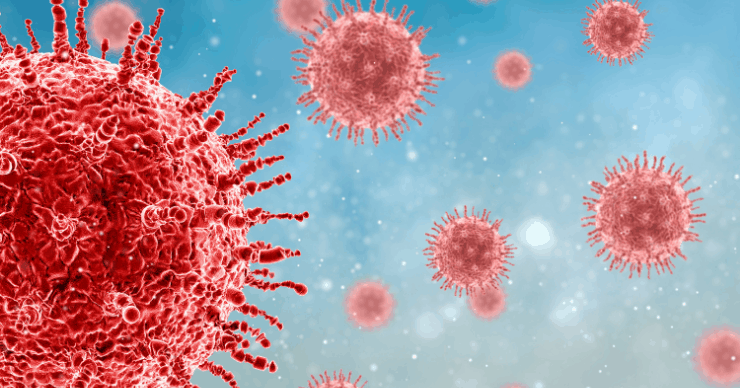
But what they are is – they’re a little package of cell membrane with proteins in it, with a strand of either DNA or RNA in it, and maybe some enzymes in there too. So they’re very, very simple. In fact, this new vaccine, it’s pretty much just like a virus, except for it can’t replicate, supposedly, right, based on what we’ve been told, it’s a cell membrane with proteins in it, with an mRNA in it, that gets into your cells. So it’s working to get into your body exactly like a virus would.
The difference is, we’re injecting that directly, where a normal virus, it’s got that cell membrane with those proteins, and some are really tough, and they can hang out a long time, and they can take a lot of UV light and heat and stuff before they die. Others are really very fragile, and a little bit of light, a little bit of heat, and that cell membrane and that protein breaks down.
And so, when we’re talking about a live virus, what we mean is it hasn’t been broken down by the elements. Alright, so even if you have a virus and it’s on your table or your doorknob or whatever, after a few hours of just being around at room temperature, or if it’s hotter, that’s going to break down, and so usually a few hours, maybe 24 hours. Now it’s different for each virus, and that’s why they kind of have to test it again, okay, but we know it is going to break down and we know sunlight is the thing that breaks it down the most. Even if you breathe it out, that sun is going to sort of neutralize the virus within like a minute or two.
So having our kids outside or being even outside at a picnic where you’re even two or three or four feet away from someone really is not an unsafe activity, okay? You’re going to be breathing out – unless you’re really really sick, which hopefully you’d be at home, – one or two, you know, a couple viral particles – that’s going to be neutralized very quickly.
Dr. Parks
Katie: Even in Michigan where we’re spending lots of gray, cloudy time?
Well, I’m talking about in the sun, and this is why viruses go away, right, during the summer. But anytime you have that sun, like today, it’s kind of chilly, but there’s that sun, if it’s on a surface, it’s going to kill it on that surface, that UV light is going to degrade it.
So when a virus is live, that means it hasn’t been degraded – it can still get in your body and cause infection. Once it’s been degraded, you could test it and it would test positive for the virus. A virus has been there, but it could not infect you. So that’s a huge difference.
Dr. Parks
Katie’s thoughts: I’ve just been reading that the virus is decreasing markedly in the south but remaining a problem in the northeast and Midwest. I thought immediately about sunshine and this portion of the interview when I read that.
Katie: Sorry to interrupt, but just to clarify, are you specifically right now talking about the coronavirus COVID19, or any virus?
It could be any virus, I mean, I kind of have Coronavirus in mind, but I’m talking about any virus. So likewise, I also want to say: let’s say a very healthy young individual, I think of kids or teenagers, get this virus and let’s say they have a strong immune system; their body neutralizes it quickly. They are not making infected virus. They basically don’t even have an active infection. If that dead virus is still in the back of their throat where their body neutralized it, they’re going to test positive, okay? And then again, surfaces will test positive.
Dr. Parks
Katie’s thoughts: We know there are issues with the PCR test and the number of cycles run in particular. This is one of them, as far as I know.
RELATED: What we did when our family got COVID.
Katie: Okay, and we use the words live and dead, but I mean, I have a kindergartner, and he just had to learn what a living thing was: it moves, it needs nourishment. It forgets. Yeah, viruses are actually not alive. There’s no crawling.
Which is really amazing that they can get into you and cause infection, right? When they’re not even a cell. They can’t even really think.
Dr. Parks
How do Viruses Enter the Body?
Katie: So let’s talk about routes of transmission for viruses. How are they getting in if they can’t even crawl from my cheek to my nostril?
And so obviously, if we kiss someone or drink something, and give someone, also if we have our hands in our mouth, and we touch stuff, then other people can touch stuff. But here’s where I think that this sort of breaks down. If you are healthy, all right, you are probably not producing a huge amount of virus, okay? And so what you breathe out is going to be somewhat miniscule, alright? This can be contagious – I’m not saying if you think you have COVID…I mean, be responsible. Isolate yourself. That’s duh, right?
But the thing is, if we don’t know if we have it, should we hide for a year? Right? Well, no, you only probably had it once, right the rest of the year, you probably don’t have it, but even if you have a very light asymptomatic infection, you’re probably not breathing out a lot of virus that you’re going to get somebody infected, especially if you’re keeping that six-foot social distancing.
However, what happens when you put on a mask? What you do is you’re breathing out that virus. Is it going out and then being neutralized by the sun? No, it’s staying in, in this warm, moist environment. You’re breathing it back in so now you can infect more cells, which are going to make more virus for you to breathe into the mask, breathe back in, and reinfect.
And so I have a great concern that people who are positive and don’t know it, in those few hours or days before they don’t know it, and they’re wearing that mask, what they’re doing is they’re increasing their infection. They’re increasing the amount of virus that they have. They’re increasing their viral load. And then, so they’re more likely to get a much more severe infection.
Katie’s thoughts: Remember that this part above isn’t evidence-based that I know of. It’s a possible correlation but just conjecture on Dr. Parks’ part. Conjecture from a very wise learned person, but a theory nonetheless.
And so it’s kind of like that with the mask. What you’re doing is you’re creating an area where you’re actually going to get more airflow on the sides and wherever there’s a hole, and it’s going to actually act like a vacuum cleaner: when you breathe it’s going to suck stuff up.
When you’re breathing… I’m taking air from all around here kind of equally. And I’m breathing out kind of equally. There, you’re going to have, if you have a virus, you’re going to huge amounts are going to be in these little air streams, okay, because it’s concentrated. And you’re going to be sucking air in more forcefully from further away because it has to be more forceful because you’ve blocked all of this.
Then when you do breathe out, the virus we know they’ve done studies again, accumulates on the outside of the mask. Just watch tonight, people settle we all do it, right? We’re not in a medical setting, we really don’t feel like we’re at risk. I mean, really – if we did, we’d stay at home. And we’re fiddling with our mask. And then so you’ve got viruses accumulating on the outside of that mask at high levels now because you’ve been breathing with it on for, you know, minutes… hours, however long and now you have high levels of virus. You’re going to touch it and you’re going to touch a surface.
Katie’s thoughts: It drives me batty when people touch the outside of their masks! I was very worried about that in September and October with schoolchildren, but I feel as if I’ve been proven wrong. I really haven’t seen an uptick in illnesses of any kind in our school, so even though it’s not best practice to fiddle with the outside of your mask, it doesn’t seem to be doing as much harm as I personally expected at the beginning of all this.
I have some thoughts about the stream analogy too—I looked around at the socially distanced crowd at a band concert recently and thought about what Dr. Parks said. I noticed that almost no one’s mask actually had those wider pockets at their cheeks, including mine. I could feel my mask touching my cheeks on both sides. Not a superb seal, of course, but not creating a stream for faster air movement. So again, we must be intentional and question each source, and realize that there is going to be some conjecture here.
Katie’s thoughts: The schools and stores are sanitizing religiously, so I believe this is a mistake to say they’re not. I’m quite concerned we’re over sanitizing, in fact! UV lights, I haven’t seen yet either—have you? But surface sprays, wipes, and sanitizer is, unfortunately, everywhere.
Imagine a scenario – there was a super spreader event at a bar. Okay, so let’s just even imagine several hundred or even 1000 people at a bar. If I’m over here, how in the world do I infect someone way over at the other end of the bar when there’s like 200 people between us. Really, it’s my breath? Like do I have that much virus on my breath?
Or is it more likely that I have a mild case of diarrhea, I go into the bathroom, I use the bathroom, I flush. Viruses are so teeny tiny that they float on the air. When you breathe out, they float on the air, and when you flush that high flush… You’ve seen those toilets are like, WHOOSH!!
No matter where you are in the bathroom: if you walk in, you will be breathing that virus, okay, and it’s going to stay aerosolized on the air for hours, and then it’s going to settle onto the sink and everything else.
So what’s more likely? That one person spread it by their breath all the way around? Or that they used the restroom and that everyone that went into that restroom, either handled the door, or breathed the air, or touched the sink, and got that virus. Because if you’re out drinking, everyone’s going to go to the restroom at some point.
Katie’s thoughts: Gross, right? It’s fascinating and a bit nerve-wracking to me that as far back as spring 2020, there were questions about COVID-19 being oral-fecally transmitted.1
You can read about one researcher’s foray into the topic here.
RELATED: Let’s get some balance with masks.
Katie: Isn’t that true? So I mean, here we are a year in, and we’re not even determined on the route of transmission. Is it droplet and aerosol? Or is it fecal-oral? Which, you know, there’s evidence for both. But also what you’re saying is not only are masks likely not effective to protect others, they’re likely increasing your own risk if you are asymptomatic or slightly symptomatic, and asymptomatic people probably aren’t able to spread anyway. So we’re doing a lot of things doing a lot of visual hygiene theater.
Now if we actually wanted to take concrete measures toward preventing the spread, what we would do is we would have had UV lights installed in all the bathrooms and restaurants.
And we could say, “Stay open because you’re, just, right with your own people, but you know, wipe those doorknobs off or find a way to open the door where you push the little thing with your foot or something. And you know, have that door open, put a UV light so when someone says motion activated when someone walks in, it goes off so you’re not irradiating yourself. And they know to do this… we know to do this and so the fact that it hasn’t been done suggests to me that there’s some sort of ulterior agenda.
We’ve had a year – I mean, I could understand a month in if we didn’t have UV lights.
Why are there no UV lights on the keypads at Meijer? Why is no one even talking about the keypads at Meijer? I mean, really? We’re all wearing masks and they’re talking about you know someone comes shouting at you if you walk in someplace because you don’t have a mask on and I just you know to me it’s like you don’t have your green hat on! You know Green Hats Prevent COVID.
Katie: There really aren’t any social or mental health implications to installing some UV lights. Whereas we have some definite social and mental health implications with all of this, of being afraid of people, and masking, and social distancing, as you know, as someone who teaches children and seeing some of this happen with our children with their adolescence.
What are Cytokine Storms?
So what about, I mean, we also have this big belief that this coronavirus, well, and it’s true, I mean, this coronavirus, obviously is more deadly than the common cold coronavirus, and we heard a lot about cytokine storms back in March and April 2020. I don’t hear about it as much anymore, but I’m also very afraid of the news. So is the cytokine storm still a big cause of death in severe cases?
Now, whether that’s because the virus itself was more deadly, which I think is true, or we’re treating it better now, which I don’t know because I’m not a doctor. I’m just not really sure.
But you know, we knew that this virus was going to attenuate and that’s part of the theater that they’re not telling people. We knew this was going to weaken.
Now the next time we see it, like in Michigan, we’re done. We’ve hit herd immunity. We went off the bell curve. We went down, we’re done. We’re still supposedly seeing 1000 cases a day. As far as I’m concerned, most of those (I’m not saying there’s not going to be a random case here and there) are probably false positives. All right, we know that we’ve had like 600,000 cases in Michigan. We know that that’s 10 to 15 times less, the recorded cases are 15 to 10 to 15 times less, they already did the studies.
Antibody studies where they measure people’s antibodies and show that we’re not even getting close to catching all the cases. Many people are not going in because they don’t want to do the contact tracing. They’re like: I have it, I’m just going to stay home; I’m not going to get tested. So a few months ago, I mean, everybody had it. People in my church people I mean, you know, We had it, we stayed home, you know, we self quarantined. So many, many people had it.
Katie’s thoughts: I have to interject here in writing that it’s a bit bold to say we’ve reached herd immunity as if it’s fact. In Michigan, and in the US, I don’t think this is the case. In fact, our Michigan numbers are increasing a lot again now, early April, even in urban areas. So this was a jump in logic to say that because “I” don’t really know people getting it, we’ve probably all had it. This bums me out because I begin to call into question some of the other facts or conjectures here. Still a helpful interview, still good to hear the opinions of learned folks, but even Ph.D.s sometimes state opinion or theory as fact.
Katie: There are people who are very, very careful, who stayed home a lot. I mean, I have a good friend from high school who just lost both parents in northern Michigan. So it’s still real. I mean, it’s still out there. But perhaps if you were very, very, very careful and safe and stayed home and weren’t exposed, you know, now these are the people who are becoming the real cases.
But by and large, Michigan is done. And the death rate was much, much lower for this huge wave. It was very low. And again, it was mostly in seniors.
With that, the cytokine storm is really real. Okay, that’s one thing about this. And so, the question is what predisposes you to that? And there are some things:
One is low vitamin D. African Americans, such as myself, are chronically low in vitamin D. In fact, 80 to 90% of Americans are low in vitamin D.
This is something that should have been addressed. We’re a year into this, it should have been addressed so long ago. Everyone’s had plenty of time to meet with their doctor and figure out what’s right for them. Test their vitamin D levels, especially those who are in vulnerable groups, right? Get that vitamin D.
Vitamin D shuts down the cytokine storm.
And so what happens is, as your immune response ramps up, you want that immune response, you want to kill the virus. For it to be normal and to be shut down normally, you have to have vitamin D. And if you don’t have vitamin D, it’s not shut down normally.
Now, some people have mutations in their vitamin D receptors, or other different parts of that system, where even if they do have it, theirs is not working properly. And so they’re going to be most at risk. Okay, okay. And there’s another molecule that’s really important for this too, and it’s called glutathione. Glutathione is the body’s master antioxidant. Interestingly, Tylenol depletes it. So what do a lot of people do when they get sick? They take Tylenol, which makes them even more at risk.
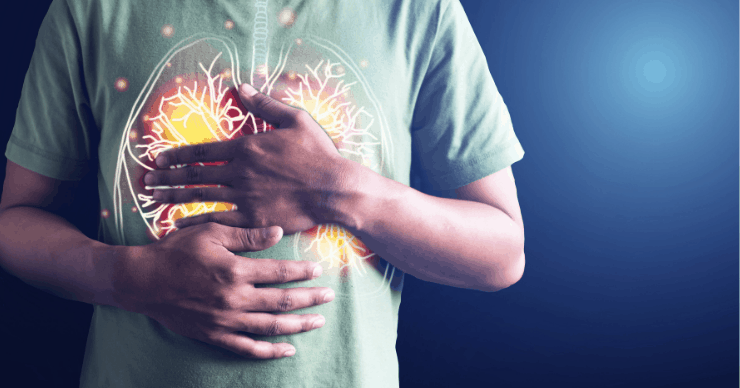
And we know that that cytokine storm that happens in the lungs, if you have glutathione, it prevents… These cells are making a lot of cytokines, which are like a fire, they’re telling everybody FIRE! FIRE! and starting fires everywhere, right? And the cells themselves have cytokines inside of them. It’s like they have gasoline inside of them. If they fall apart, they’re spreading the gasoline everywhere and fueling the fire. Glutathione prevents them from falling apart. It keeps your immune system, your immune cells intact, and prevents them from basically falling apart and throwing all of their inflammatory molecules all over the place. So it prevents lung pathology.
And so many people, if you feel you have some lung pathology, there’s things you can do to increase your glutathione.
Your cruciferous vegetables are great places to start, throw some broccoli, lightly steamed broccoli into your soup or whatever. Your sulfuric vegetables: your onions, your garlic, all of those are great. You can buy liposomal glutathione supplements as well. And so there are different ways where you can raise your glutathione. And I mean, your doctor or your natural care practitioner can actually give it IV with glutathione in it.
And so we have to ask these questions: Why isn’t some of that being done along the same lines? I think they were giving as high as almost 200 units of vitamin D. But even like50,000 units of vitamin D they were giving it on the day that they were admitted to the hospital to get reduced mortality, like in half.2
And so they were seeing huge reductions in mortality by giving vitamin D.
And vitamin D works much better if you’ve been taking it all along, right.
You can’t just… it’s not magic, right? You can’t just magically change all the systems.
But what you can do is give your body what it has been depleted in. So the illness is going to deplete all that vitamin D, vitamin A, glutathione. And so for the people who have long term COVID, that’s what they’re missing. They’re missing the antioxidants. They’re missing the vitamin D, they’re missing the ability to shut this down.
Katie’s thoughts: I agree—I’ve seen it said that hey, we know that comorbidities like diabetes, heart disease, metabolic syndrome, cause COVID-19 to be much more serious and deadly. We’ve had a year, which is enough time to make major health changes. Why aren’t we making healthy changes instead of looking to the government and pharmaceuticals to save us?
Well, it turns out she’s a vegan. And what many people don’t realize is that vitamin D and vitamin A can only be gotten from animal sources. Now there are some supplements, actually, I found one for her that was made from lichen and some other things. There are some supplements that you can find – we’ve managed to figure that out.
But in general, it’s going to predispose you, because vitamin D is found in your egg yolks, it’s found in your yellow butter, right? All those things we’ve been told are bad for us. Lard – high source of vitamin D. I’ll take some lard and some bacon myself, you know, I’m trying to prevent getting COVID!
Anti-Viral Options
Katie: So I mean, what I’m hearing is immune system is good, the cytokines are actually good when they ramp up, this is good. They’re like the soldiers going into battle. Vitamin D is the brakes on that system so it doesn’t go too crazy. And then the glutathione is going to, you know, keep the car together, keep it from falling apart and, causing these problems. So you’ve talked about some great evidence-based weapons against COVID-19, some of which can be done – most of which can be done preventatively. Are there other evidence-based, so to speak, weapons against COVID-19 that aren’t being implemented as well as you wish?
Hydroxychloroquine and Ivermectin have been shown – there are hundreds now of clinical studies, many of them done outside the US, unfortunately. And I say that, because I’m wondering why the US, who is the head of science around the world, isn’t leading, it’s evolving from behind.
And so there’s this misconception that we have antibiotics to deal with bacteria, but there are no antivirals. And this has been taught in medical school. And it’s sort of like this huge monolith that we can’t seem to get past.
But in recent years, because of molecular biology, we can actually screen hundreds of medications, thousands at a time, and cells for a particular activity. And so we can screen them for antiviral activity, and that’s been done in the last 20 years. And so what they’re finding is that molecules that they really had no idea about, are highly antiviral, and they’ve been studied for the last 20 years. Hydroxychloroquine for two decades now has been studied for its antiviral properties. It’s actually been studied as a treatment for HIV, so Tony Fauci knows about it because his work was on HIV, right? I can’t imagine that he worked on HIV but doesn’t know as head of NIAID, Infectious Disease, that they’re using it because it’s so cheap you can get it to a third world country and use it as a treatment for AIDS for HIV. Right? There are six different mechanisms that hydroxychloroquine works through.
Ivermectin works through some of the same ones, but some different, so you could actually take both of them together. Both are inexpensive. They’re not patented, so no one’s gonna make any money. They were handed out like candy. Ivermectin is a warmer, right, and so you can get it at TSC. – you can get over the counter for your horses, right. And some people are.
Hydroxychloroquine was handed out like candy for malaria, and so both can be used prophylactically. Ivermectin, the studies on that…. One study that was done I believe in a medical setting, I think in maybe Brazil, South America somewhere where they exposed like almost 800 people. And none of them on Ivermectin got it. And they exposed almost 500 people that weren’t on ivermectin in the control group, and about half of them got COVID.3
Note from Katie: The actual numbers on the study we found didn’t match Dr. Parks’ memory. 14 people in the Ivermectin group contracted the virus and 57 out of 600 in the control group got sick. The actual research still points in a positive direction, and more research is needed, but the video exaggerates the data.
Katie: God bless that control group. I read that as well. Dr. Parks, are there any caveats to hydroxychloroquine? And as far as like, other things that need to be supplemented at the same time?
So one of the many mechanisms that hydroxychloroquine is anti-inflammatory, as is ivermectin. But hydroxychloroquine specifically works as a zinc ionophore, and what that means is that lets zinc into the cells. So interestingly, quinine, which is from the cinchona tree, I’m not sure if I’m saying it, right, but basically, they scrape the bark of this tree and created this really bitter, horrible stuff, and used it as a treatment for malaria back way in the day when we were when people were colonizing, like India and Africa or whatever. And so it was called the miracle tree because malaria was so terrible. Well, it tasted awful. This quinine is what they finally named it quinine. And so they said, “It’s terrible. Put some gin in it!”
Katie: Yeah right, that’s gin and tonic!
So one way to get that zinc into your system would be to drink it with something like tonic water, which has quinine, a zinc ionophore or green tea is also a zinc ionophore, or quercetin is also a zinc ionophore. And those are sort of naturally supplements or things that are pretty commonly available.
So the zinc actually prevents the virus from replicating, it prevents it from copying itself once it’s inside your cells.
Moving Forward With Your Eyes Open
Katie: Which sounds like a pretty effective solution to keep yourself from getting sick, even if you’ve been exposed. I hear I hear your frustration. I hear your skepticism. I hear that you’re jaded. And you know what? I’m right there with you. I think, you know, you are a molecular biologist. Hello, you know what you’re doing? You’re reading the research. If you see research on hydroxychloroquine without zinc, you’re thinking, yeah, not very good research, right? Who cares what the results are, they’re not administering this correctly.
And I really, really appreciate you sharing all of this with us here and my audience. And I know I mean, I’ve just, I learned a lot from you. And I like having sources I can trust. I like having scientists who aren’t beholden to anyone that I’m feeling cynical or skeptical about? Are there any other like last tidbits that people would need to know, as we’re making really big decisions about how we live our lives, what we stand up for, and potentially how we deal with, you know, the V decision coming up here?
Katie’s thoughts: Who’s to say if Dr. Parks feels jaded because she knows the truth and isn’t seeing it, or if she was a cynical person before all this and that shifted her perspective to be on the lookout for untruths? We filter everything through facts we can confirm and our own common sense…
So I will talk briefly, I’ll try to keep it brief, about the vaccine. So there are two that have been out Moderna and Pfizer. Those are both a form of gene therapy; they’re not a traditional vaccine but instead of… usually, we’ll put in a gene that you want, like a broken, you know, you’d have a broken gene and you put in a new one, so your body can make that new gene.
Instead, they’re putting in a viral gene. And so what they’re doing is they’re using kind of like a little virus to get this gene into your cells. And your cell is then going to make that into a viral protein and put it on its surface and say, “I’m a virally infected cell, I’ve been infected with the virus!”
Well, what’s your immune system going to do? It’s going to go destroy all those cells that it thinks are infected. But those cells are cells you might need, they might be cells in your heart or your kidneys, we’re not really sure where that vaccine sort of micro-virus is going to go. And that mRNA may be expressed for a very long time unless the cells are destroyed by your immune system, right?
There’s one more really big concern that I have in the original SARS virus that was in 2002, they tried to make, they had several candidates for a vaccine, and they gave them to animals, and they had a robust immune response. And they thought – this is great! Then they exposed them to the virus, and they got this antibody-dependent enhancement. And we’ve still been working out the details of what’s been happening with that.
We also see this in other diseases – we saw in dengue, where if you get dengue once you’re okay. You get it twice, it’s really severe because you have this cytokine storm and you die. So they made a vaccine to it. And instead of helping people, what it did is it was the first exposure. So then when they were exposed, they got sick, really sick the first time, and died.
Katie’s thoughts: I read these studies as well, in the fall, when mRNA vaccines were being discussed. I was horrified and skeptical. For me and my family, I don’t need to do any more research because I’m in a “wait and see” mode. I will extensively research the vaccines if I get to a point where I’m even considering them, but for now, with the information I have, it’s a hard pass.
Alright, and so one of the mechanisms this might be happening by is not the virus or the vaccine themselves, it’s the antibodies that the person makes. And so here’s what might be happening. When you have a virus, your body makes all these antibodies. And then when you see it again, once you see it, your body kind of super ramps up that antibody production to fight the virus, but for some reason, the antibodies to the spike protein actually then infiltrate the lungs and have a toxic destroying effect on the lungs. So your body’s own antibodies that are supposed to fight the virus are actually destroying your lungs.
Okay, so this is one of the mechanisms that they’ve seen happening with this, there’s still some science that needs to be done.
But that is so concerning because what it means is that… So if I saw the virus naturally, my body is going to make antibodies to many different parts of the virus, not just that spike protein. The spike protein is the one, those are the antibodies we’re worried about. Those are the ones that are going to destroy your lungs. But I might make it to a different part, a different protein, or a different part of something, right.
But with this vaccine, we’re injecting just the mRNA for the spike protein, we’re only making the spike protein. So all the antibodies your body makes are going to be to that spike protein. Then let’s say we know this virus is attenuating, we got six months down, ramping down getting weaker and weaker, it’s just going to be a cold. But let’s say we see it again in the fall. Everyone who’s got that vaccine, let’s say it’s a really weak virus, and most people don’t even realize they have it. It’s so weak at this point, and many people may be immune to it, right.
But if you’ve gotten that vaccine, you see it again, what’s your body going to do? It’s going to ramp up that antibody production. Okay, so it may not be the virus that harms you at all. It’s the antibodies you make to it that may now go to your lungs and start this severe lung immunopathology. And then you’ll be so sick. And my concern is, will they tell us that if that’s what happens? Will they say “It’s a problem with the vaccine?” Right?
Katie: Or “Wow, COVID got worse.”
Katie’s thoughts: This is scary stuff, even though it’s all guessing and “what might happen” at this point. But there are toooooo many questions and unknowns for me. Happy to hear thoughts in the comments.
It’s very, very, very disturbing. And what’s most disturbing is there’s no discussion and debate.
Katie’s thoughts: This IS the most concerning part! The fact that I feel like I can’t share publicly that I have questions or concerns. The fact that I password-protected this interview. It’s unacceptable to have hesitations, and that doesn’t feel like a free society to me. I am looking for ways to get more active, as Dr. Parks suggested.
That’s I have seen a couple of ads for people but I don’t think a lot of people are signing up right? Get paid to get exposed to the COVID virus – no thank you. But you can do those with animals. And so they should have taken the time to really do robust animal studies so that we could be sure that this is not an issue. And there’s no discussion of it whatsoever.
Katie’s thoughts: In March when we posted the interview clips, I researched animal challenge studies and almost missed this one—but there might now (just recently) be an animal challenge study, albeit small.4 Still more research needs to be done!
It’s on my Telegram page, if you look for Telegram, Dr. Christina Parks. You can get your treatment, you can have a telemed, get your treatment there. To me, this is pretty much over. We have herd immunity. There’s really no reason for the vaccine we’ve got. The vaccine was only supposed to be authorized if there were if there were not effective treatments. And so I feel that they demonized these treatments so that they could get that authorization for an emergency vaccine.
One last thing I would like to say is, please remember, this vaccine, all of them, there’s a new one coming out Johnson & Johnson are under an emergency authorization. They cannot mandate a vaccine on an emergency authorization. But they will try and they will tell you that you’re going to be fired. And so honestly, I would rather slice off part of my body, like cut off an arm, then get this vaccine. Because once my arm heals, the rest of my body is whole. If once you inject this, you don’t know how it’s changing your immune system and your insides that may change you for the rest of your life. And you don’t know how to get back out.
And so I would say that you need to reach out – there’s the Informed Consent Action Network, ICAN. And there, they’ve got great lawyers. I know Mary Holland stepped up to say if you do not want to take this vaccine and your employer is pushing it on you, then you need to see them, and they’ll probably do some sort of class action lawsuits that says no, this is an emergency authorization, and under an emergency authorization you cannot mandate an experimental vaccine. So please do not cave.
Katie’s thoughts: This is something I’m not afraid to tell people! If you talk to anyone with questions or hesitations, please assure them that this cannot be mandatory (yet). Be sure no one feels coerced or forced.
Katie: Hmm, thank you so much for that. And I just, I mean, I’m going to distill down.
You said four really vitally important lines in the last 5-10 minutes:
First, this cannot be mandatory.
Second, you said to be active. You don’t mean exercise. You mean don’t be afraid to speak. If we are afraid to speak, we are going to hit a point where we lose our voice.
Third, and this is the most important if you remember nothing else from this interview, remember this. There’s still science that needs to be done. Dr. Christina Park said that. She said it kind of off-handily. There’s still science that needs to be done.
This means the fourth thing we have to remember is that when there are still “what ifs” and “what might happen” questions about something, that plays very strongly into my personal decision. I know it plays very strongly into Dr. Park’s decision. And I want to encourage all of you to think: Do I really want to make a decision I may not be able to reverse, I cannot reverse when there’s still so much research that needs to be done?
Thank you so much, Dr. Parks. I really appreciate your time today.
If you’d like to hear more from Dr. Parks, here’s another interview she did.
After the recording she said that she wanted to say this but didn’t:
I want everyone to think: “how should I get active?” We all need to ask questions:
- Is there a chance this might cause antibody dependent enhancement?
- What about Ivermectin – does that prevent transmission?
- Hydroxycloroquine- were those studies well done?
Please keep your discussion in the comment respectful! I know this is an emotionally charged time and subject!
[question]Do this cordially and respectfully but encourage others to learn more about this, especially doctors![/question]
Footnotes:
- Amirian, S. (2020, April 23). Potential fecal transmission of SARS-CoV-2: Current evidence and implications for public health. Int Journal of Infectious Disease, 95, 363-370. https://doi.org/10.1016/j.ijid.2020.04.057
- Leaf, D.E. & Ginde, A.A. (2021, February 17). Vitamin D3 to Treat COVID-19: Different Disease, Same Answer. JAMA, 325(11), 1047–1048. doi:10.1001/jama.2020.26850
- Hill, A., Abdulamir, A., Ahmed, S., Asghar, A., Babalola, O., Basri, R. et al. (2021, January 19). Meta-analysis of randomized trials of ivermectin to treat SARS-CoV-2 infection. Research Square. Retrieved from https://www.researchsquare.com/article/rs-148845/v1
- Amanat, F., Strohmeier, S., Rathnasinghe, R., Schotsaert, M., Coughlan, L., García-Sastre, A., & Krammer, F. (2021, March 2). Introduction of Two Prolines and Removal of the Polybasic Cleavage Site Lead to Higher Efficacy of a Recombinant Spike-Based SARS-CoV-2 Vaccine in the Mouse Model. mBio, 12(2), e02648-20. https://mbio.asm.org/content/12/2/e02648-20

Greetings to you Sister Katie….I have subscribed to your site here and you sent me a link to see the full interview with Dr. Christina Parks about the subject of a virus etc. However, I cannot find it anywhere on your site…not the full interview…How can I watch it then?
Please help me
The full interview video is embedded towards the top of this post. If the video is not showing up you might have something blocking it, you can watch it on YouTube here: https://youtu.be/Pg9VUGXHe6I
Hmmm Im not seeing the video here or on youtube, just an error message?
Hmmm…That’s odd. I can see both just fine. Do you have an ad blocker or something that could be blocking it on your end?
It’s a dang shame you felt you had to password protect this, but I totally understand. And have to say, I agreed with all of your ‘annotations’ to the transcription. But this was a fascinating interview. I ‘think’ I was able to discern the science from the anecdotal information. As a retired RN, it only reinforced my decision to not take the vaccine. Her description of that whole process was affirmation of what I have been saying all along. Her ending was extremely important, that the emergency authorization means it can not be mandated (I was not aware of that) and also that they should have done animal studies along with the release under the EUA. I’m fighting mad that this important stuff can’t be shared with the general public, that ‘msm’ isn’t reporting on anything but the ‘agenda’. I don’t need a tin foil hat to protect myself, just honest journalism to help me form my own opinions. Thank you for this Katie!
You are very welcome! Information about no mandating is definitely the most important knowledge…
Thank you, ladies! We freedom-loving Michiganders need to stick together. Katie, I’m sorry you had to password-protect this interview, but I understand. The world is topsy-turvy for sure.
Have you heard Dr. Ryan Cole of Idaho? He also speaks about Vitamin D, Ivermectin, and the vaccine. His clip is on YouTube (for now) and here: https://www.brighteon.com/2bc32e58-5f18-43d0-91b9-3f15fcb1dcef.
Thanks for sharing that interview as well, Sarah! Hadn’t heard of Dr. Cole yet…thank goodness there are quite a few out there speaking the truth…
Thank you! I enjoyed reading this and found it helpful! 🙂
Here’s another question that I have had and can’t find an unbiased place to get it answered: A few years ago when I was teaching Biology to my kids, we learned about viruses. We read that your body produces antibodies to fight off the infection. They hang around for a while, then your body makes “memory cells” to give you lifelong immunity to that particular virus. (I’m sure it was a really basic, kid-friendly description of how viruses work.)
What makes COVID different? If you get it, do you really only have immunity for a few months? Or are they only basing the “3 month immunity” on only how long antibodies stay in the body? Is there truly something different about it, or is it a scare tactic to make people get the vaccine even if they’ve already had the virus itself?
GREAT question! I know a tiny bit about it, but not quite as much as I’d like to. First, the 3 months immunity is based on what’s tested, basically what they’ve “proven” to be the length of the antibodies. Many, many people have antibodies longer than that, but official rulings need to start out very conservatively, and I get that. So it’s basically that they’re sure with a very low margin of error that a human’s antibodies will last 3 months, and beyond that, we just don’t know. It might be a very long time, it might be 9 months on average, it might depend on the severity of your illness or your variant…
Coronaviruses in general must be a bit of a different class – the common cold is a coronavirus, and we get them rather often, right? Whether that’s because they’re actually different strains of a cold or that the lifelong memory works differently for coronaviruses, I’m not sure. Is this a scare tactic? My opinion is yes, and personally, I’d rather wait to learn more about antibodies AND the side effects and long-term effects of the vaccine (and really, how long THAT immunity will last too) before I make any irreversible decisions.
It all does seem mired in political misinformation. 🙁
Thanks for adding to the conversation!
🙂 Katie
Thank you! One more trustworthy doctor backing up my previous research. Wish my family would believe me when I tell them these things. I believe God is in control.
That’s the most important takeaway here – whatever the facts, whatever the virus, whatever the suffering…God is in control. His word says not to live in a spirit of fear, and whether that’s a fear of a virus, of sickness, of death, or of political upheaval and loss of freedom (my own personal temptation to fear), we need to run to His loving arms and “be not afraid.”
Blessings! Katie
I just want to say thank you!